Welcome to the comprehensive guide for your Fiat 500! This manual provides essential information‚ assisting owners with operation‚ maintenance‚ and troubleshooting‚ ensuring a delightful driving experience.
Overview of the Fiat 500 Model
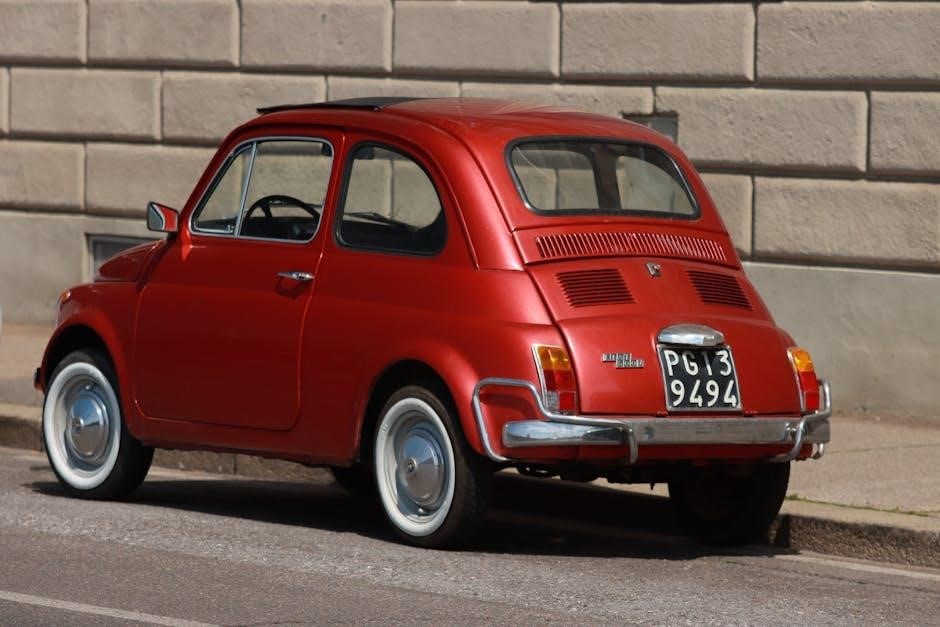
The Fiat 500‚ an iconic city car‚ boasts a rich history evolving from its original 1957 predecessor to the modern‚ stylish vehicle enjoyed today. This model represents a blend of Italian design‚ practicality‚ and technological innovation. Available in various trims – including the electric Icon – the 500 caters to diverse driving needs and preferences.
Known for its compact size‚ the Fiat 500 excels in urban environments‚ offering nimble handling and easy parking. Despite its small footprint‚ it provides a surprisingly spacious and comfortable interior. The electric version‚ specifically‚ delivers zero-emission driving‚ aligning with growing environmental consciousness. Owners often seek to personalize their vehicles‚ exploring options like parking sensor retrofits to enhance convenience and safety.
Understanding your Fiat 500’s features‚ from its dashboard layout to its braking system‚ is crucial for optimal performance and enjoyment. This manual will guide you through these aspects‚ ensuring a confident and informed ownership experience.
Purpose of the Instruction Manual
This instruction manual serves as your primary resource for understanding and operating your Fiat 500 effectively and safely. It’s designed to provide comprehensive guidance‚ covering everything from basic vehicle controls to detailed maintenance procedures. Whether you’re a first-time Fiat owner or experienced driver‚ this manual will enhance your ownership experience.
Within these pages‚ you’ll find crucial information regarding starting and stopping the engine‚ understanding the instrument cluster‚ and performing essential fluid level checks. It also addresses potential issues‚ such as door locking problems‚ and offers insights into Fiat-specific error codes‚ assisting with troubleshooting.
Furthermore‚ this manual aims to empower you to maintain your vehicle in optimal condition‚ extending its lifespan and ensuring reliable performance. Resources like FIAT ePER‚ an online parts catalogue‚ complement this guide‚ offering additional support. Consider it your trusted companion for all things Fiat 500!

Vehicle Components & Controls
Explore the Fiat 500’s key features! This section details the dashboard‚ steering wheel functions‚ seat adjustments‚ and vital safety systems for confident operation.
Dashboard Layout and Instrument Cluster
Understanding your Fiat 500’s dashboard is crucial for safe and informed driving; The instrument cluster‚ centrally located‚ provides vital information at a glance. Key indicators include the speedometer‚ displaying your current speed‚ and the tachometer‚ showing engine revolutions per minute (RPM).
A fuel gauge monitors remaining fuel levels‚ while a temperature gauge indicates engine coolant temperature. Warning lights illuminate to alert you to potential issues – pay close attention to lights concerning oil pressure‚ battery charging‚ and engine malfunctions. The digital display‚ if equipped‚ may show trip information‚ outside temperature‚ and gear selection. Familiarize yourself with the location and function of each indicator to ensure a smooth and secure driving experience. Regularly check these displays during operation to maintain vehicle awareness.
Steering Wheel Controls & Functions
The Fiat 500’s steering wheel integrates several controls for convenient operation while driving. Multifunction buttons typically allow you to adjust audio volume‚ change radio stations‚ and control media playback without taking your hands off the wheel. Cruise control functions‚ if equipped‚ are also often accessed via steering wheel buttons‚ enabling effortless highway driving.
Some models feature phone controls‚ allowing you to answer and end calls hands-free. The horn is centrally located for easy access in emergency situations. Power steering assists with maneuverability‚ reducing steering effort. Familiarize yourself with the precise location and operation of each control to maximize convenience and safety. Always prioritize maintaining a firm grip on the steering wheel while operating these functions.
Seat Adjustments and Safety Features
Proper seat adjustment is crucial for driving comfort and safety in your Fiat 500. Most models offer manual or power-adjustable seat positions‚ allowing you to customize height‚ backrest angle‚ and lumbar support. Ensure your seating position provides clear visibility and comfortable reach to all controls.
Safety features are paramount. The Fiat 500 is equipped with front airbags‚ and many models include side airbags and curtain airbags for enhanced protection. Always ensure all passengers are properly secured with seatbelts. ISOFIX child seat anchors are provided for secure child seat installation. Headrests should be adjusted to the correct height to minimize whiplash risk in the event of a collision. Regularly check the functionality of all safety features to ensure they are operating correctly.

Operation & Driving
This section details the core driving procedures for your Fiat 500. Learn how to safely start‚ stop‚ shift gears‚ and utilize the braking system for optimal control.

Starting and Stopping the Engine
Starting Your Fiat 500: Ensure the parking brake is engaged and the gear selector is in neutral (or park for automatic transmissions). Insert the key into the ignition or‚ for keyless models‚ ensure the key fob is inside the vehicle. Turn the key to the ‘ON’ position (or press the start/stop button) and wait for the instrument cluster to illuminate. Turn the key further to the ‘START’ position (or continue holding the start/stop button) until the engine starts. Release the key once the engine is running.
Stopping the Engine: Slow down and come to a complete stop. Engage the parking brake firmly. For manual transmissions‚ shift into neutral. For automatic transmissions‚ shift into ‘P’ (Park). Turn the key to the ‘OFF’ position (or press the start/stop button). Ensure the steering wheel is not turned sharply while switching off the engine‚ as this can strain the steering lock mechanism. Always remove the key from the ignition when leaving the vehicle.
Important Notes: Do not attempt to start the engine if you smell fuel. If the engine fails to start after several attempts‚ consult a qualified technician;
Gear Shifting and Transmission
Manual Transmission: The Fiat 500’s manual transmission utilizes a five or six-speed gearbox. Depress the clutch pedal fully before shifting gears. Select the desired gear by moving the gear lever smoothly and precisely into the correct position. Release the clutch pedal gradually while simultaneously applying gentle pressure to the accelerator pedal. Avoid abrupt clutch release to prevent jerking or stalling.

Automatic Transmission: The automatic transmission offers ‘P’ (Park)‚ ‘R’ (Reverse)‚ ‘N’ (Neutral)‚ and ‘D’ (Drive) positions. To shift‚ ensure the vehicle is completely stopped (except when shifting between Drive and Reverse). Press the brake pedal firmly and move the gear selector to the desired position. For manual shifting‚ some models offer a ‘+/-’ mode allowing driver control.
Important Considerations: Never shift into ‘P’ (Park) while the vehicle is in motion. Avoid prolonged operation in low gears. Regular transmission fluid checks (as outlined in the Maintenance section) are crucial for optimal performance.
Braking System and Parking Brake
Braking System: Your Fiat 500 is equipped with an efficient hydraulic braking system featuring disc brakes on all wheels. Apply firm and consistent pressure to the brake pedal for effective stopping. The vehicle also incorporates Anti-lock Braking System (ABS) to prevent wheel lock-up during emergency braking‚ enhancing steering control. A pulsing sensation in the pedal during ABS activation is normal.
Parking Brake: The parking brake is essential for securing the vehicle when parked. Engage the parking brake lever firmly to prevent rolling‚ especially on inclines. Regularly check the parking brake cable adjustment to ensure optimal functionality. Avoid driving with the parking brake partially engaged‚ as this can cause excessive wear and damage.
Emergency Braking: In emergency situations‚ apply maximum pressure to the brake pedal. ABS will activate to help maintain steering control. Remember to release the brake pedal slightly if you feel the vehicle is beginning to skid.

Maintenance & Care
Regular maintenance is crucial! This section details essential checks – fluids‚ tires‚ and fuses – to ensure your Fiat 500 operates safely and efficiently.
Fluid Level Checks (Oil‚ Coolant‚ Brake Fluid)
Maintaining correct fluid levels is paramount for optimal performance and longevity of your Fiat 500. Regularly checking these fluids prevents potential damage and ensures safe operation.
Engine Oil: Park on a level surface and allow the engine to cool. Locate the dipstick‚ remove it‚ wipe clean‚ reinsert fully‚ and then remove again to check the oil level. It should be between the minimum and maximum marks. Top up with the recommended oil grade if necessary.
Coolant: Check the coolant level in the expansion tank when the engine is cold. The level should be between the ‘MIN’ and ‘MAX’ marks. Never open the coolant reservoir cap when the engine is hot!
Brake Fluid: Locate the brake fluid reservoir (usually near the master cylinder). The level should be between the minimum and maximum marks. If the level is consistently low‚ inspect the brake system for leaks and consult a qualified technician.

Important Note: Always use the fluids specified in the vehicle’s technical specifications. Incorrect fluids can cause damage to your Fiat 500.
Tire Pressure and Maintenance
Proper tire pressure and regular maintenance are crucial for safety‚ fuel efficiency‚ and tire lifespan of your Fiat 500. Incorrect pressure can lead to uneven wear‚ reduced handling‚ and increased risk of punctures.
Checking Tire Pressure: Refer to the sticker located on the driver’s side doorjamb for the recommended tire pressure for your vehicle. Use a reliable tire pressure gauge to check the pressure when the tires are cold (before driving). Inflate or deflate tires accordingly.
Tire Inspection: Regularly inspect tires for cuts‚ bulges‚ or uneven wear. Check the tread depth using a tread depth gauge; ensure it meets legal requirements. Rotate tires every 6‚000-8‚000 miles to promote even wear.
Valve Caps: Always ensure valve caps are securely in place to prevent dirt and moisture from entering the valve stem.
Important Note: Never exceed the maximum pressure indicated on the tire sidewall. Consult a qualified technician for any tire repairs or replacements.
Fuse Box Locations and Fuse Replacement
The Fiat 500 utilizes multiple fuse boxes to protect its electrical systems. Understanding their locations and how to replace fuses is essential for addressing minor electrical issues.
Fuse Box Locations: Fuses are typically located in three areas: the dashboard‚ the passenger compartment right pillar‚ and within the engine compartment. Refer to your vehicle’s specific diagram (often found inside the fuse box cover) for precise locations.
Fuse Replacement Procedure: Before replacing a fuse‚ ensure the ignition is switched off. Identify the blown fuse using the fuse box diagram. Use a fuse puller (often included in the fuse box) to remove the old fuse. Insert a new fuse of the exact same amperage rating.
Important Safety Note: Never replace a fuse with one of a higher amperage‚ as this could damage the electrical system and create a fire hazard. If a fuse repeatedly blows‚ consult a qualified technician.
Troubleshooting Common Issues
This section addresses frequently reported problems. Door locking malfunctions and parking sensor retrofitting are covered‚ alongside guidance on interpreting Fiat-specific error codes.
Door Locking Problems
Experiencing issues with your Fiat 500’s door locks? This section provides troubleshooting steps for common locking malfunctions. A reported issue involves doors failing to lock via the key fob or manual key‚ yet locking when operated from inside the vehicle.
First‚ ensure the key fob battery is functioning correctly. Try resynchronizing the key fob with the vehicle‚ following the procedure outlined in the ‘Steering Wheel Controls & Functions’ section. If the problem persists‚ inspect the door lock mechanisms themselves for any obstructions or damage.
Check the internal door handles and linkages to confirm smooth operation. A disconnected or damaged linkage can cause this symptom. If you’ve recently replaced door handles‚ double-check the installation to ensure all connections are secure. If these steps don’t resolve the issue‚ professional diagnosis by a qualified technician is recommended‚ as it could indicate a more complex electrical fault within the central locking system.
Parking Sensor Retrofit Information
Considering adding parking sensors to your Fiat 500? Many owners‚ particularly those with the Electric Icon model‚ express interest in retrofitting this feature. It’s understandable to feel disappointed if your vehicle wasn’t delivered with sensors despite initial expectations‚ especially after a lengthy wait.
Retrofitting is possible‚ but requires careful consideration. It’s not a simple plug-and-play installation. You’ll need a complete parking sensor kit specifically designed for the Fiat 500‚ including sensors‚ wiring harness‚ control module‚ and potentially a buzzer or display. Professional installation is strongly recommended to ensure correct functionality and avoid damaging the vehicle’s electrical system.
Ensure the kit is compatible with your specific Fiat 500 model year and trim level. Improper installation can lead to sensor malfunctions or interference with other vehicle systems. Research reputable installers experienced with Fiat vehicles for the best results and a reliable warranty.
Understanding Fiat Specific Error Codes
Encountering a warning light or error message on your Fiat 500’s dashboard? Decoding Fiat-specific error codes can be crucial for diagnosing and resolving issues efficiently. While generic OBD-II codes provide some information‚ Fiat vehicles often utilize unique codes offering more precise details about the problem.
Resources like online Fiat forums and communities (established since 2002!) are invaluable for accessing lists of these codes. A list originally sourced from Italian Fiat forums provides a starting point‚ though translation may be necessary. These codes can pinpoint problems ranging from sensor failures to engine management system malfunctions.
Remember that error codes are diagnostic aids‚ not definitive solutions. They indicate where to begin your investigation. Further testing and inspection by a qualified mechanic are often required to confirm the root cause and implement the appropriate repair. Always consult a professional for complex issues.
Technical Specifications

This section details key specifications of your Fiat 500‚ including engine details‚ dimensions‚ weight‚ and fuel consumption data for informed vehicle understanding.
Engine Specifications
Understanding your Fiat 500’s engine is crucial for optimal performance and longevity. This section outlines the key specifications for various engine options available across different Fiat 500 models. Details include engine type – typically ranging from 1.2-liter petrol to electric powertrains in newer iterations – and displacement.
Power output‚ measured in horsepower (hp) and kilowatt (kW)‚ varies depending on the specific engine variant. Torque‚ expressed in Newton-meters (Nm)‚ indicates the engine’s rotational force. Compression ratio is another vital specification‚ influencing engine efficiency. Fuel injection systems‚ whether multi-point or direct injection‚ are also detailed.
For electric models‚ battery capacity (in kilowatt-hours ⎯ kWh) and electric motor power are specified. Information regarding valve configuration (number of valves per cylinder) and ignition system type is provided for petrol engines. Always refer to your vehicle’s specific documentation for precise engine details‚ as specifications can differ based on model year and trim level.
Dimensions and Weight
Knowing the physical characteristics of your Fiat 500 is essential for maneuvering‚ parking‚ and understanding its load capacity. This section details the key dimensions‚ including overall length‚ width‚ and height‚ crucial for navigating tight spaces and assessing garage fit. Wheelbase‚ the distance between front and rear axles‚ impacts ride stability.
Track width‚ measuring the distance between wheels on the same axle‚ influences handling. Interior dimensions‚ such as legroom and headroom‚ are also provided for passenger comfort assessment.
Vehicle weight is categorized into several key figures: unladen weight (the vehicle’s weight without passengers or cargo)‚ gross vehicle weight (GVW – the maximum permissible weight including load)‚ and maximum authorized towing weight (if applicable). These weights are vital for safe operation and legal compliance. Refer to the vehicle’s registration documents and door placard for accurate weight information specific to your model.
Fuel Consumption Data
Understanding your Fiat 500’s fuel efficiency is crucial for economical driving and trip planning. This section presents official fuel consumption figures‚ expressed in liters per 100 kilometers (L/100km) and miles per gallon (MPG)‚ determined under standardized testing conditions. Note that real-world fuel economy can vary significantly.
Factors influencing fuel consumption include: driving style (aggressive acceleration and braking increase consumption)‚ vehicle load (heavier loads require more fuel)‚ road conditions (uphill driving consumes more fuel)‚ and environmental factors (wind resistance and temperature).
Data is typically provided for three driving cycles: urban (city driving with frequent stops and starts)‚ extra-urban (highway driving at constant speeds)‚ and combined (a weighted average of urban and extra-urban cycles). Always refer to the vehicle’s official documentation for the most accurate and up-to-date fuel consumption data specific to your engine type and transmission. Regularly monitoring your fuel consumption helps identify potential issues affecting efficiency.